
Lime Calcination Plant
Introduction
The Lime Calcination Plant, also known as a quicklime plant, lime processing plant, or quicklime production plant, is a complete production line system for producing quicklime through the calcination of limestone. Quicklime, also known as burnt lime or calcium oxide (CaO), is one of the most versatile industrial minerals with wide application across construction, metallurgy, chemical processing, environmental protection, and water treatment industries.
Henan Innovative Industry has extensive experience in designing and supplying complete lime calcination plants tailored to the client’s required production capacity, end-product quality specifications, and site conditions. From limestone crushing through calcination, dust collection, and product packaging, we engineer the complete production line as an integrated system.
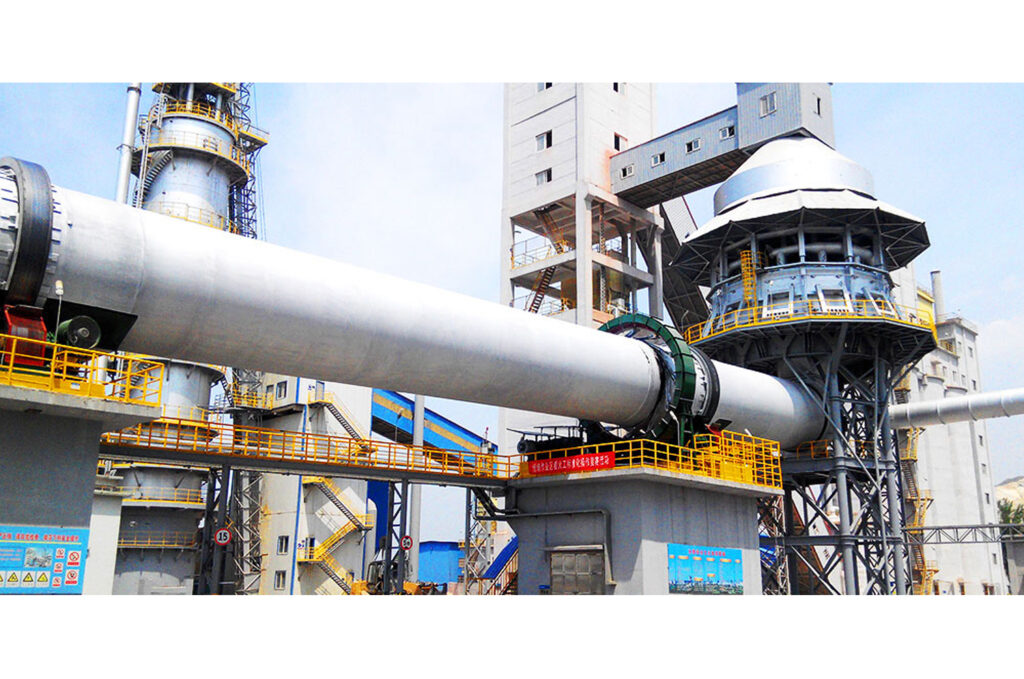
MANUFACTURING PROCESS
The core operating principle of the Lime Calcination Plant is the thermal decomposition of calcium carbonate through high-temperature calcination. When limestone containing primarily calcium carbonate is heated to the appropriate calcination temperature, it decomposes according to the following reaction: CaCO₃ → CaO + CO₂
The complete quicklime manufacturing process consists of four primary stages: crushing, calcining, dust collection, and packing. The specific process configuration varies depending on whether the plant uses a rotary lime kiln or a vertical lime kiln as the primary calcination unit.
QUICKLIME PLANT WITH ROTARY LIME KILN
The rotary lime kiln configuration is the preferred choice for large-scale continuous quicklime production. In this configuration, a vertical preheater and vertical cooler are integrated with the rotary kiln to optimize energy efficiency and product quality.
The complete process operates in the following sequence:
Sifted limestone of the required feed size is transported by belt conveyor to the preheater silo. Inside the vertical preheater, the limestone is preheated using hot exhaust air recovered from the rotary lime kiln, raising the material temperature to approximately 900 degrees Celsius and decomposing 30 to 40% of the limestone before it enters the kiln. This preheating stage significantly reduces the thermal energy required in the kiln and improves overall plant energy efficiency.
The preheated limestone is then transferred into the rotary lime kiln where calcination is completed. Fuel is introduced through the firing system at the discharge end of the kiln, generating the high-temperature flame required for full calcination of the remaining calcium carbonate.
After calcination, the hot quicklime is discharged from the kiln and transferred to the vertical cooler, where it is cooled to approximately 60 degrees Celsius before being conveyed to the product silo.
Dust collectors are installed at each transfer and processing point to capture airborne particles, ensuring clean operation and compliance with environmental protection requirements.
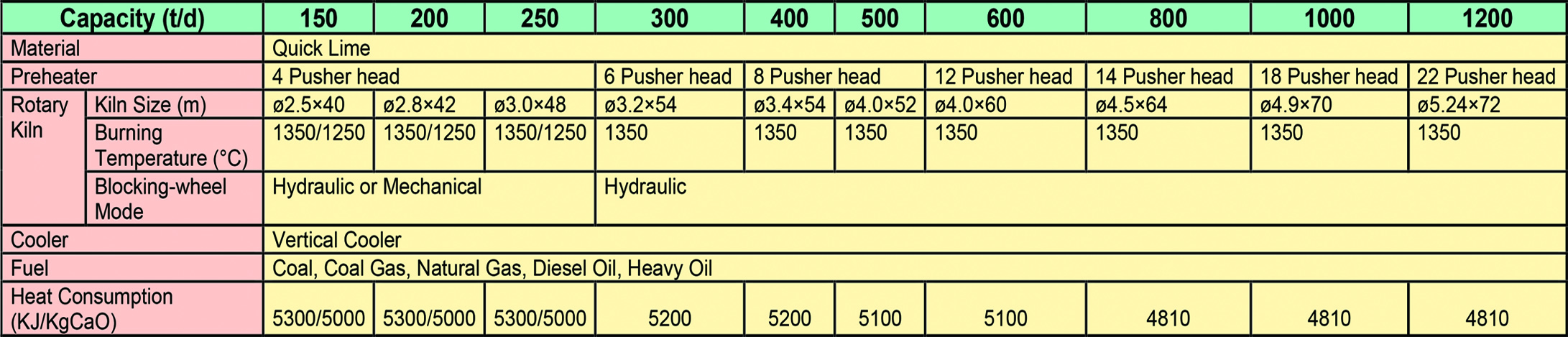
SPECIFICATION DATA
Specification data is provided as a general reference. Final plant capacity, kiln dimensions, and technical parameters are determined based on your limestone feed characteristics, required quicklime quality, and production output requirements. Contact our engineering team for a detailed technical proposal.
Looking for a Complete Lime Calcination Plant?
Tell us your limestone feed size, required quicklime quality, and production capacity. Our engineering team will design the right lime calcination plant configuration for your operation.