
Jaw Crusher
Introduction
The Jaw Crusher is a primary crushing machine designed for the medium and fine crushing of hard ores and rocks across metallurgy, mining, chemical, cement, construction, refractory materials, and ceramic industries. It is the standard first-stage crushing equipment in mineral processing and grinding production lines, including Raymond Mill, Ball Mill, and Roller Mill systems where raw material size reduction is required before grinding.
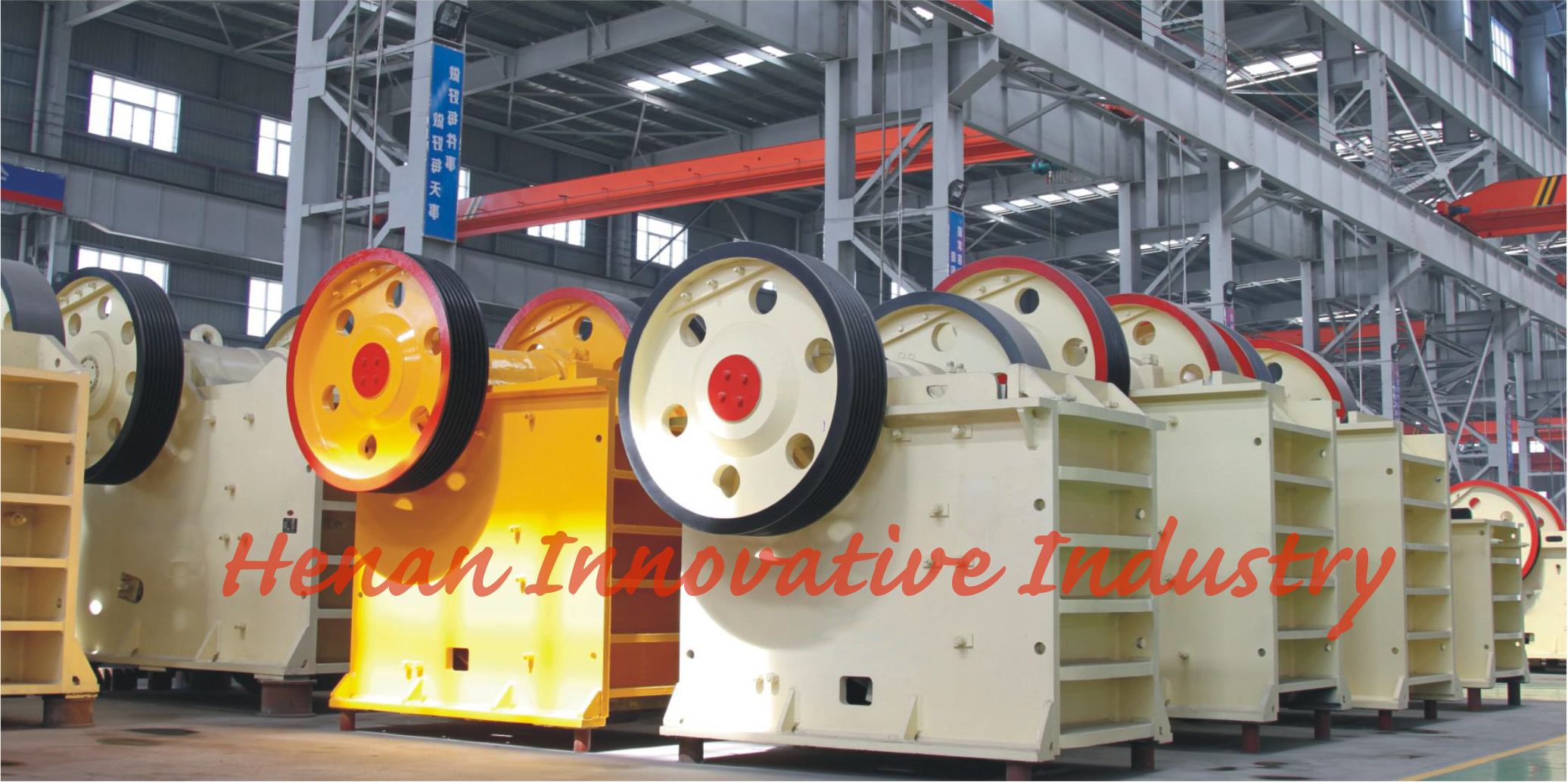
Henan Innovative Industry manufactures Jaw Crushers with processing capacity from 1 to 2200 t/h and finished output size from 0 to 40 mm. Our Jaw Crushers are engineered for reliable continuous operation in demanding industrial environments, with models available for both primary crushing (NT-PE series) and secondary crushing and fine crushing (NT-PEX series).
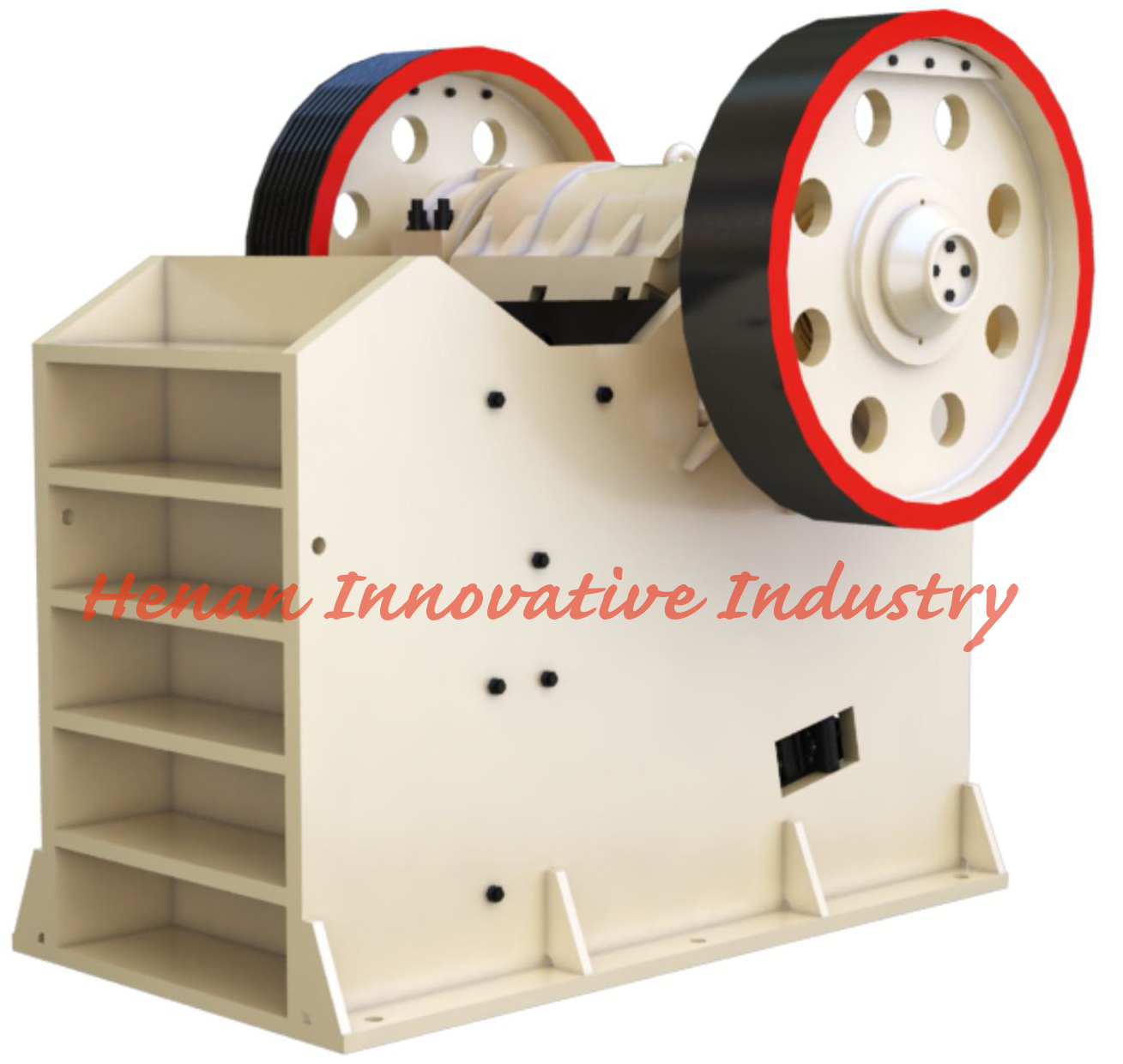
Application Fields and Range
Application Fields
Metallurgy, mining, chemical, cement, construction, refractory materials, ceramics, and aggregate processing.
Key Technical Parameters
Processing Capacity: 1 to 2200 t/h
Finished Size: 0 to 40 mm
USAGE AND APPLICATION RANGE
01.
The Jaw Crusher is suitable for crushing all kinds of hard and soft ores with compressive strength below 300 MPa. This includes pebble, calcite, granite, quartz, concrete, dolomite, bluestone, iron ore, limestone, coal gangue, construction waste, ferrosilicon, basalt, sandstone, ore, glass, and cement clinker.
02.
The Jaw Crusher serves as the primary crushing stage in complete mineral processing lines, preparing raw materials for secondary crushing, grinding, and classification. It is commonly integrated into Raymond Mill, Ball Mill, and Roller Mill production lines where controlled feed size is critical for grinding efficiency and equipment protection.
JAW CRUSHER STRUCTURE
The Jaw Crusher is composed of the following primary components: frame, bracket, jaws, eccentric shaft, jaw plates, cheek plates, toggle plate, tension rod, springs, and flywheels.
Key Components:
Frame: Heavy-duty steel plate welded construction, stress relieved after fabrication for structural integrity under full load conditions.
Jaw Plates: High manganese steel castings, reversible for extended service life. The new tooth-type plate design increases jaw plate length and improves crushing capacity.
Cheek Plates: Manganese steel castings allow easy replacement when worn.
Eccentric Shaft: Forged from hardened and tempered chrome molybdenum steel, with large diameters engineered for heavy-duty applications.
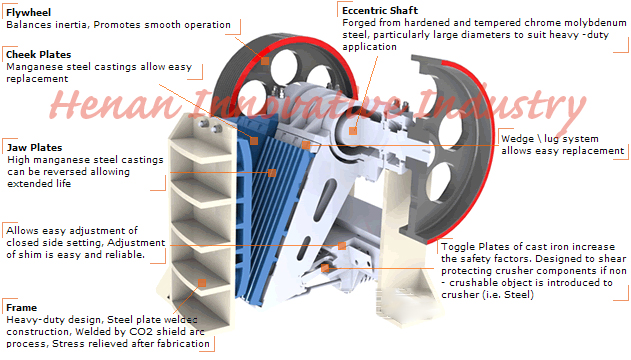
Flywheels: Balance inertia and promote smooth operation through the crushing cycle.
Toggle Plate: Cast iron construction increases safety factors. Designed to shear and protect crusher components if a non-crushable object enters the crushing chamber.
Wedge/Lug System: Allows easy adjustment of closed side setting and reliable shim-based adjustment.
The maximum compression strength of materials to be crushed is 320 MPa. The NT-PE series is commonly used for primary crushing, and the NT-PEX series is used for secondary crushing and fine crushing.
WORKING PRINCIPLE OF JAW CRUSHER
The Jaw Crusher operates through the following mechanical process:
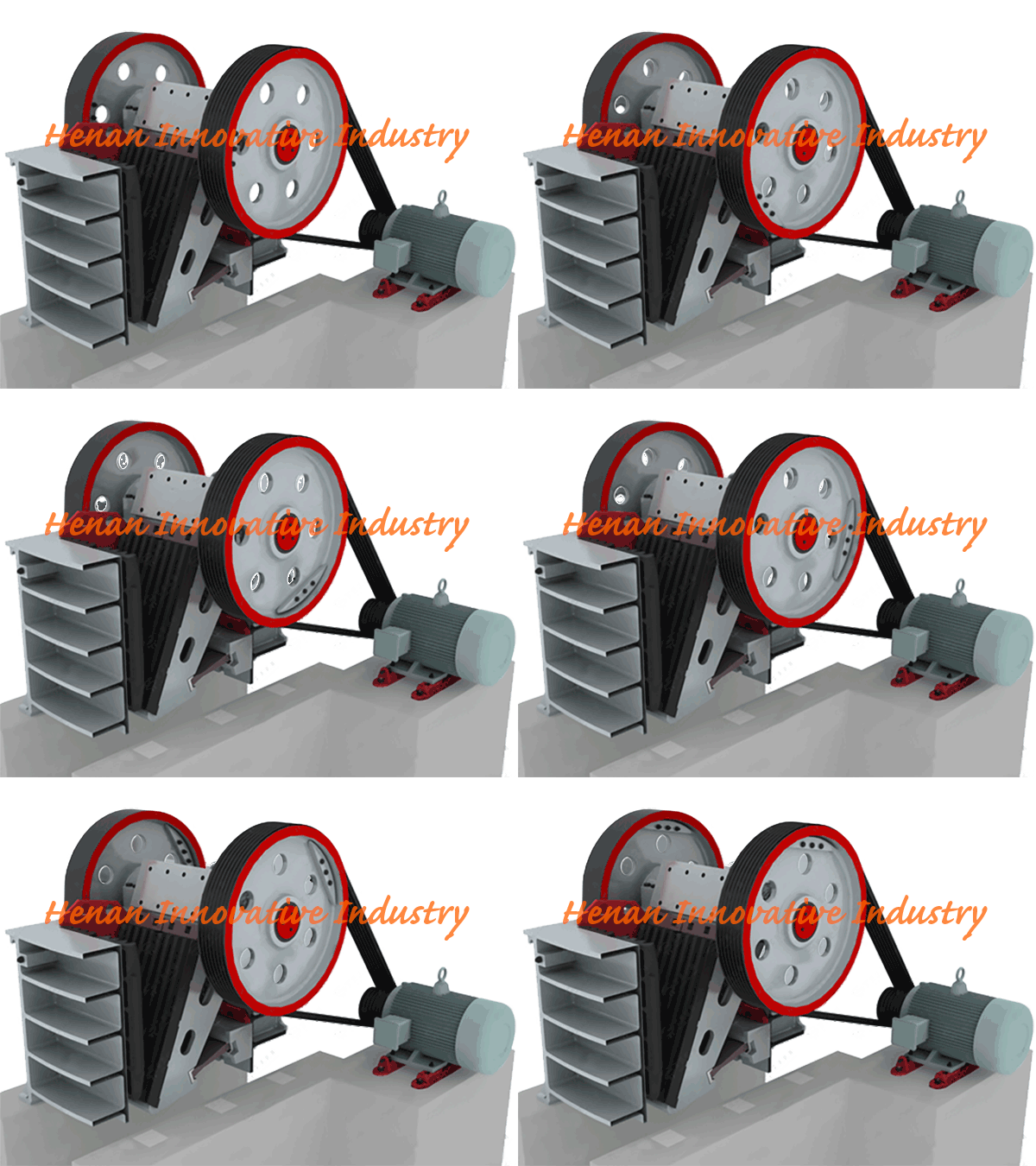
The motor transmits power through a belt drive system to the eccentric shaft. The eccentric shaft drives the moving jaw to perform periodic motion toward the fixed jaw plate.
When the moving jaw moves upward, the angle between the toggle plate and the moving jaw plate increases. This pushes the moving jaw toward the fixed jaw, compressing the material between the jaw plates and crushing it in the process.
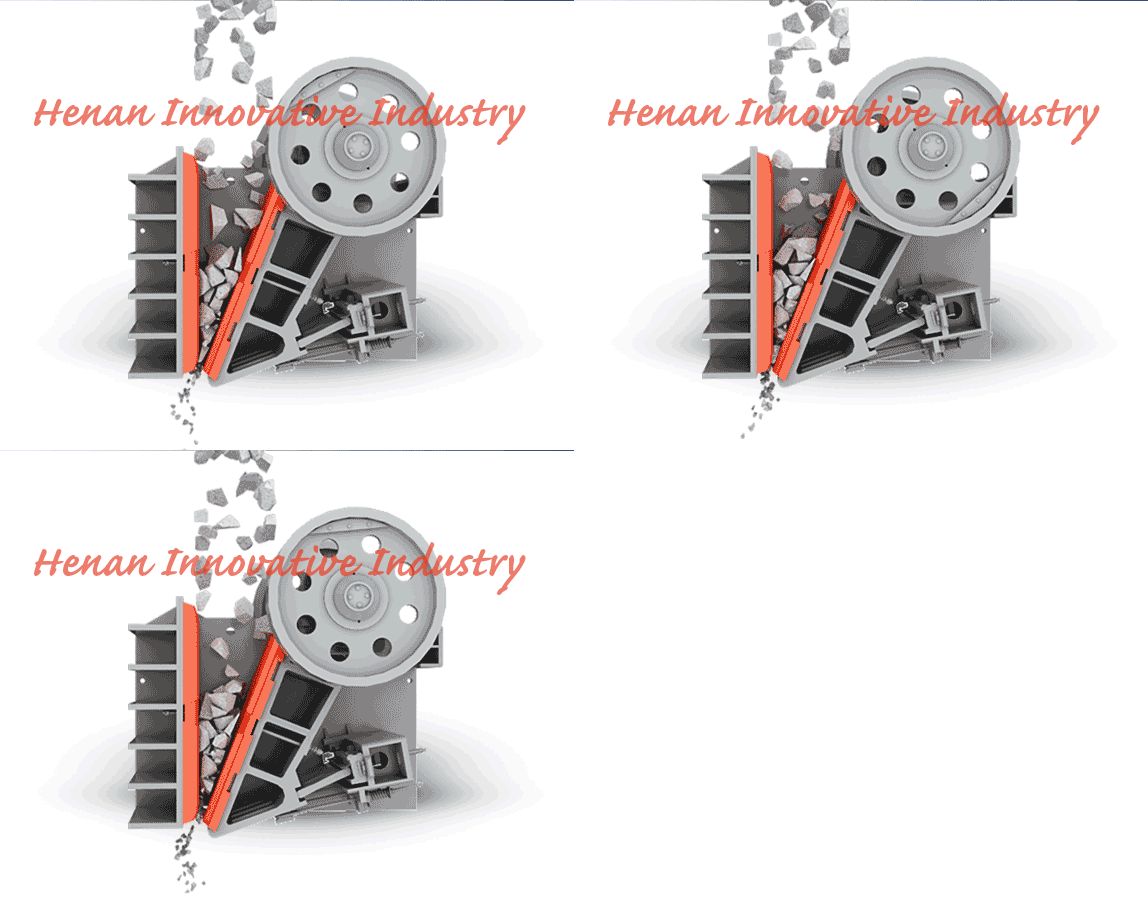
When the moving jaw moves downward, the angle between the toggle plate and the moving jaw decreases. The moving jaw pulls away from the fixed jaw by the tension rod and spring mechanism, allowing the crushed material to discharge from the outlet.
This periodic crushing and discharging motion continues as long as the motor operates, delivering continuous batch production capacity.
TECHNICAL ADVANTAGES AND FEATURES
01.
Durable Moving Jaw Assembly
The movable jaw plate is manufactured from high-quality steel castings and driven through two large flywheels. This advanced design delivers smooth operation and extended service life under continuous heavy-load conditions.
02.
Deep Crushing Cavity with No Dead Zone
The crushing chamber is engineered with a deep profile and optimized geometry that eliminates dead zones. This improves material feeding capability and increases throughput capacity across all feed conditions.
03.
Safe and Reliable Lubrication System
The centralized lubrication system is protected from contamination and allows easy access for maintenance. Component replacement is straightforward, reducing downtime and maintenance costs.
04.
Wide Discharge Port Adjustment Range
The discharge opening is adjustable across a wide range to meet various production requirements. The gasket-type adjustment system strengthens operational flexibility and allows quick adaptation to different product size specifications.
05.
Simple Structure with Strong Crushing Capacity
The overall design emphasizes mechanical simplicity, reliable operation, and high crushing capacity. Easy maintenance access reduces servicing time and labor requirements.
06.
Extended Jaw Plate Design for Higher Capacity
The Jaw Crusher adopts a new tooth-type jaw plate with increased length compared to conventional designs. This directly improves crushing capacity and extends wear part service life.
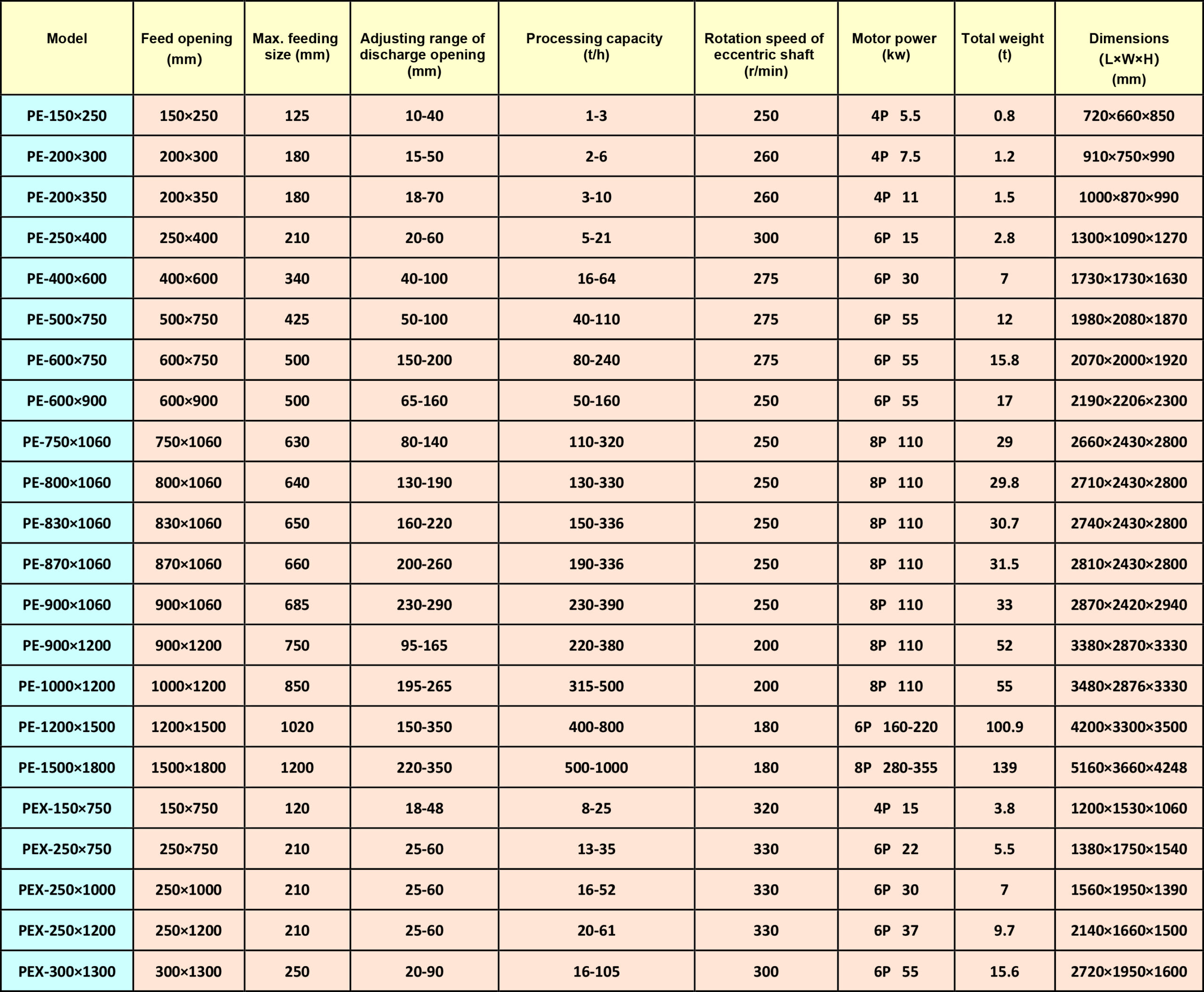
SPECIFICATION DATA
The specification data below covers the full NT-PE and NT-PEX series range, from small laboratory-scale units to large industrial primary crushers. Final model selection is determined based on your feed material characteristics, required processing capacity, discharge size, and site conditions.
Looking for a Jaw Crusher for Your Crushing Operation??
Tell us your material type, feed size, required processing capacity, and discharge size. Our engineering team will recommend the right NT-PE or NT-PEX series Jaw Crusher for your primary or secondary crushing stage.