
ROTARY DRYER
Introduction
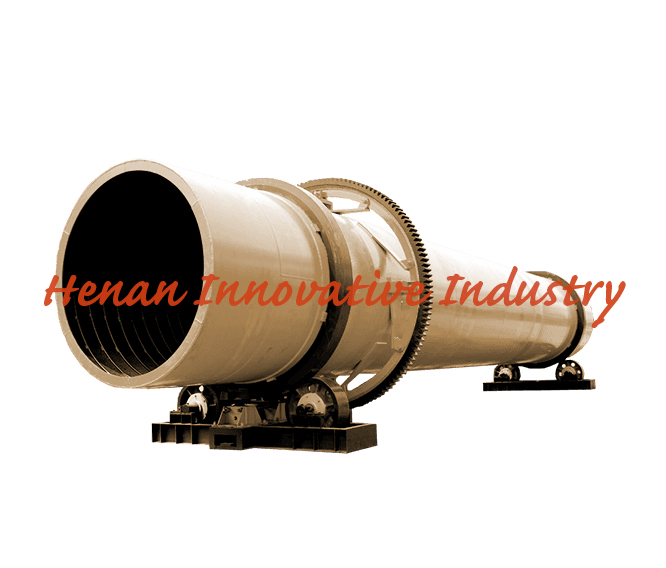
The Rotary Dryer is a high-efficiency industrial drying system designed to reduce the moisture content of bulk solid materials through direct or indirect contact with a controlled heated gas stream. It is one of the most widely used industrial dryers for bulk material processing, chosen for its robust performance, high processing capacity, and ability to deliver consistent drying results across variable feed material conditions.
Henan Innovative Industry manufactures Rotary Kilns for cement clinker calcination, active lime production, light burned dolomite processing, bauxite and aluminium hydroxide calcination, and chromite ore processing. Our kilns are engineered to meet the specific feed material characteristics, required production capacity, and thermal processing conditions of each client’s operation.
Application Fields and Range
The Rotary Dryer is suitable for drying operations across metallurgy, building materials, light industry, chemical industry, and casting industries.
It is widely used for drying the following materials: metal powder, iron concentrate pellets, blue carbon, lignite, fly ash, quartz sand, clay, limestone, slime, river sand, iron oxide scale, sludge, coke, copper concentrate, silicon carbide powder, rare earth ore, mineral powder, tin ore powder, cobalt ore powder, nickel ore powder, manganese ore powder, gypsum powder, bentonite, kaolin, gold ore powder, iron ore powder, steel slag, fluorite ore, coal powder, and mixed materials.
Key Technical Parameters:
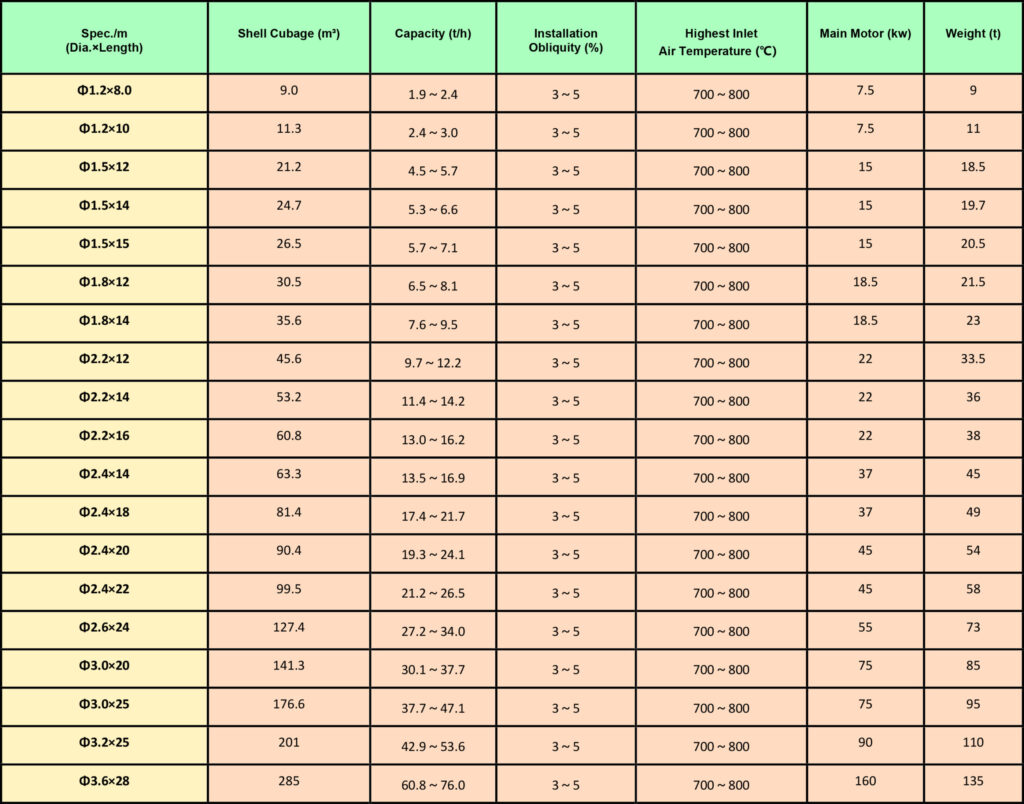
Production Capacity: 1.9 to 76 t/h
Shell Cubage: 9.0 to 285 m³
Weight: 9 to 135 t
Main Motor Power: 7.5 to 160 kW
CLASSIFICATIONS
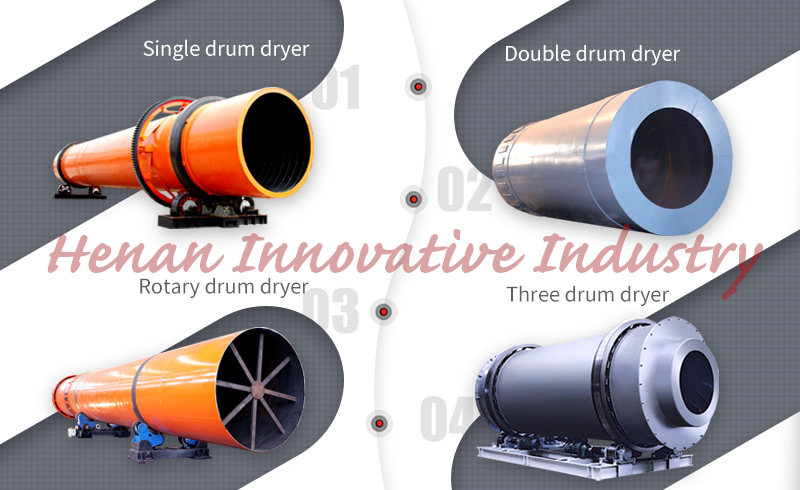
Rotary Dryers are classified based on their heat transfer method and the relationship between the material flow and the hot gas stream:
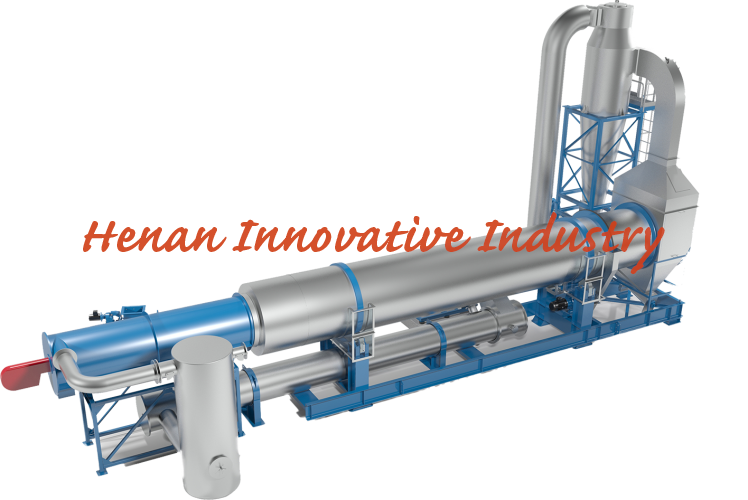
Direct Heated Rotary Dryer brings the material into direct contact with hot combustion gases generated by a burner system. This is the most common configuration for materials that are not sensitive to contamination from combustion gases.
Indirect Heated Rotary Dryer uses preheated air or an inert gas stream that does not contain combustion gases, preventing direct contact between the material and the heat source. This configuration is used when product contamination is a concern or when the material requires careful temperature control.
Combined Direct-Indirect Heated Rotary Dryer combines both heating methods to improve overall thermal efficiency while maintaining product quality requirements.
Structure and Working Principle
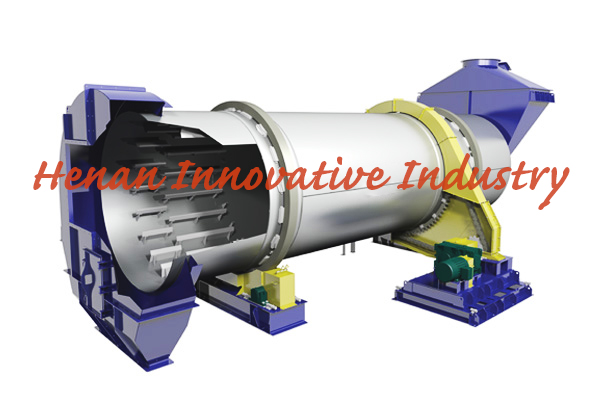
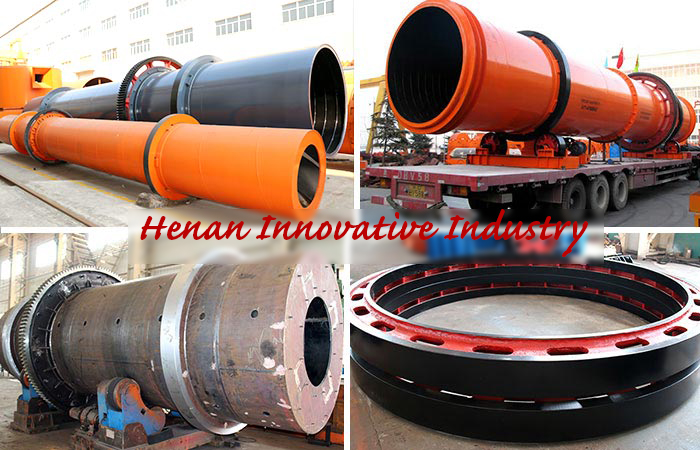
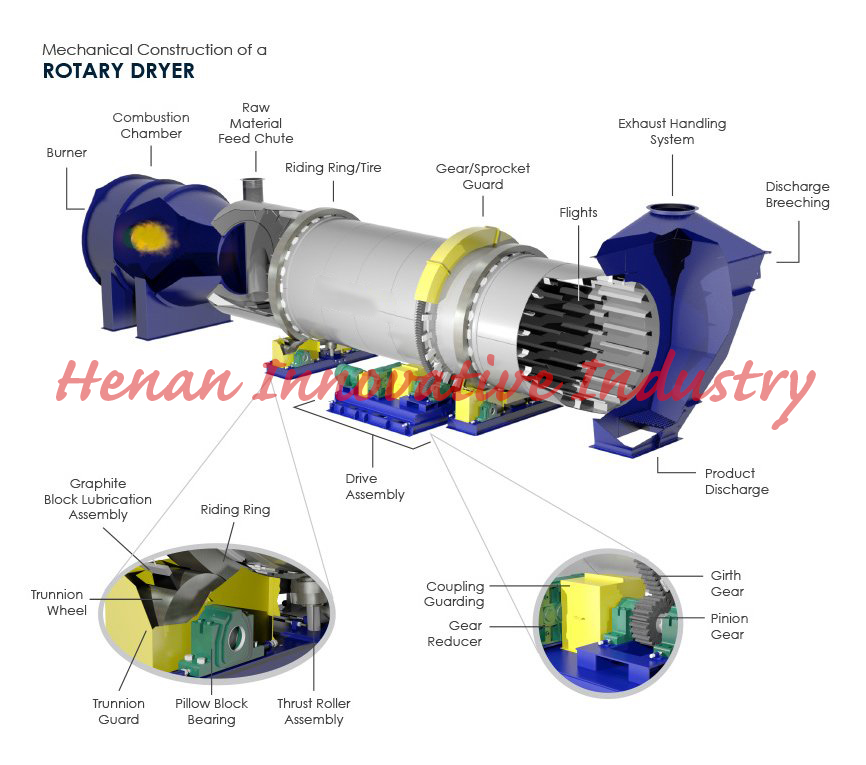
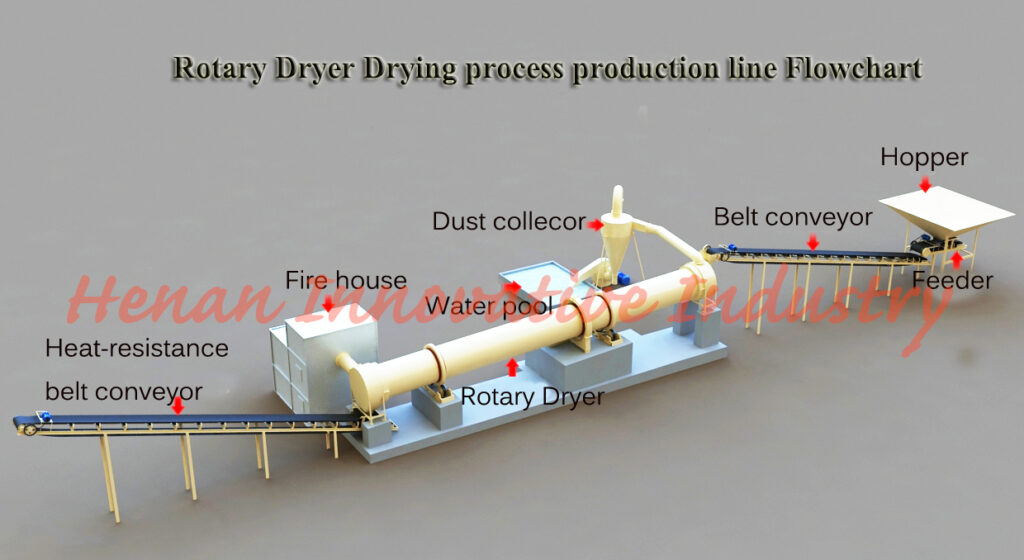
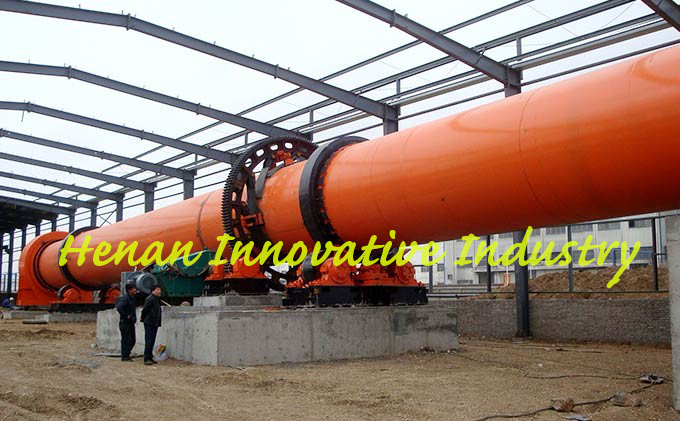
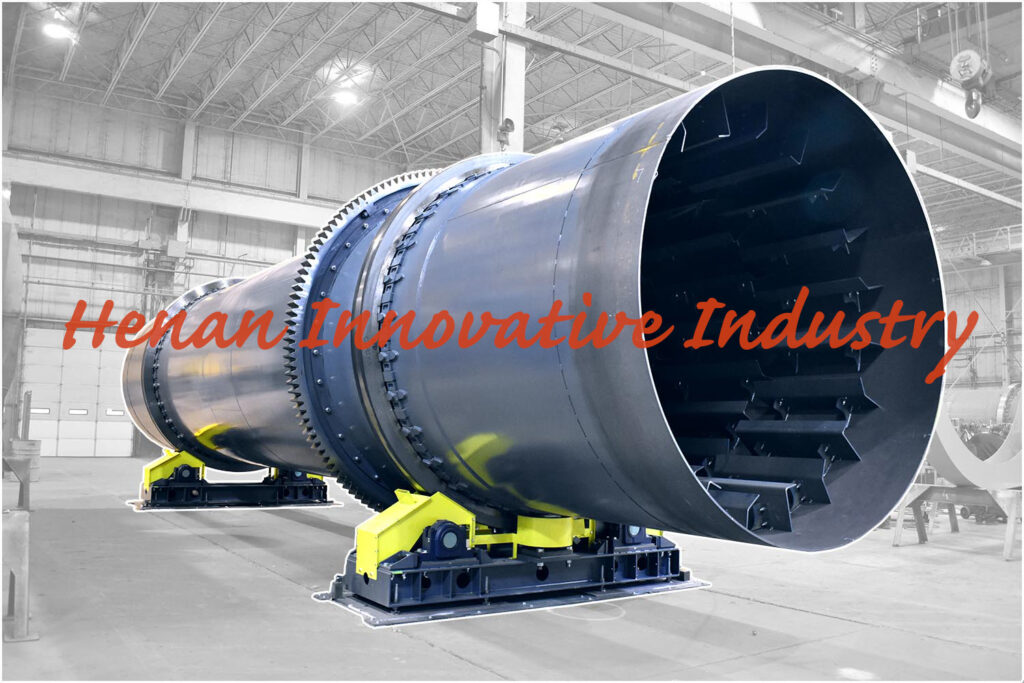
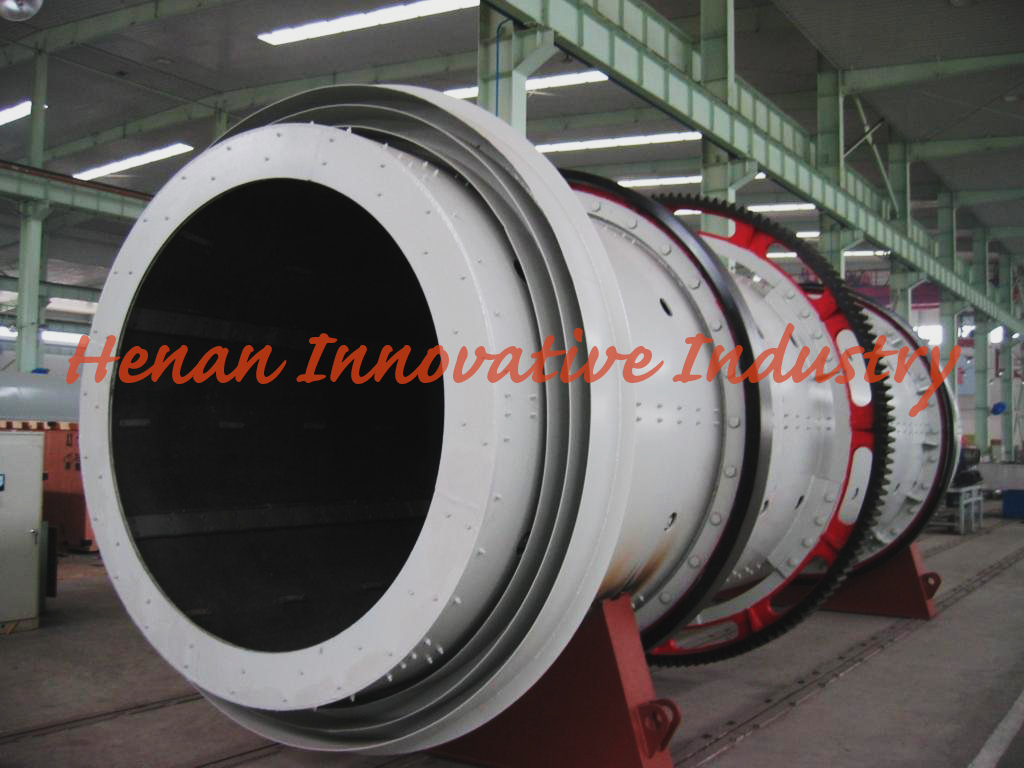
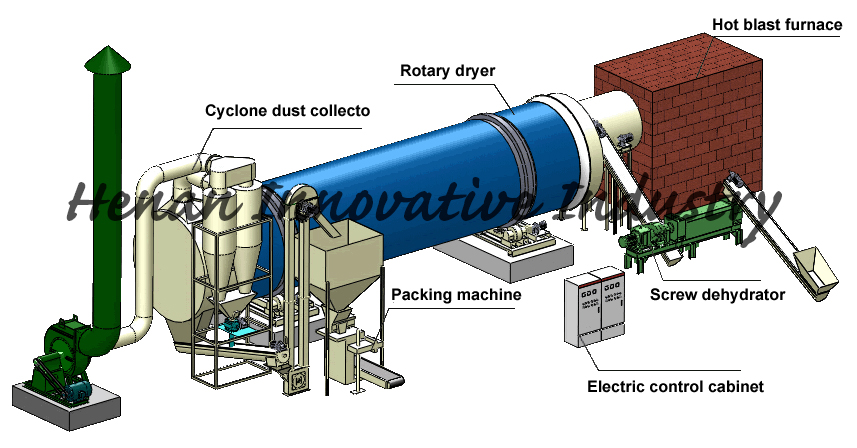
The Rotary Dryer consists of the following primary components: frame, heat supply source, loading machine, feeding machine, rotary drum, material crushing device, discharging machine, induced draft fan, discharger, and power distribution cabinet.
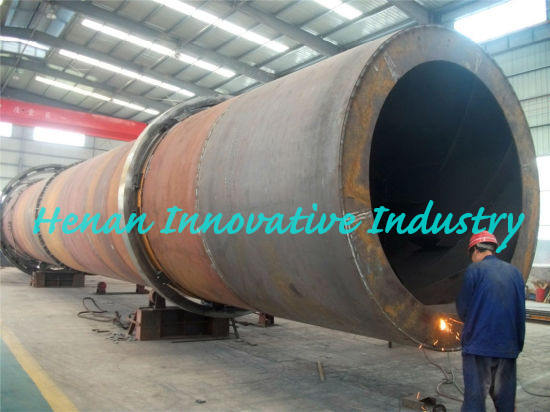
The dryer body is a large rotating cylindrical drum, typically supported by concrete columns or steel beams, and inclined slightly so that the discharge end is lower than the feed end. This inclination allows material to move gradually from the feed end toward the discharge end under gravity as the drum rotates.
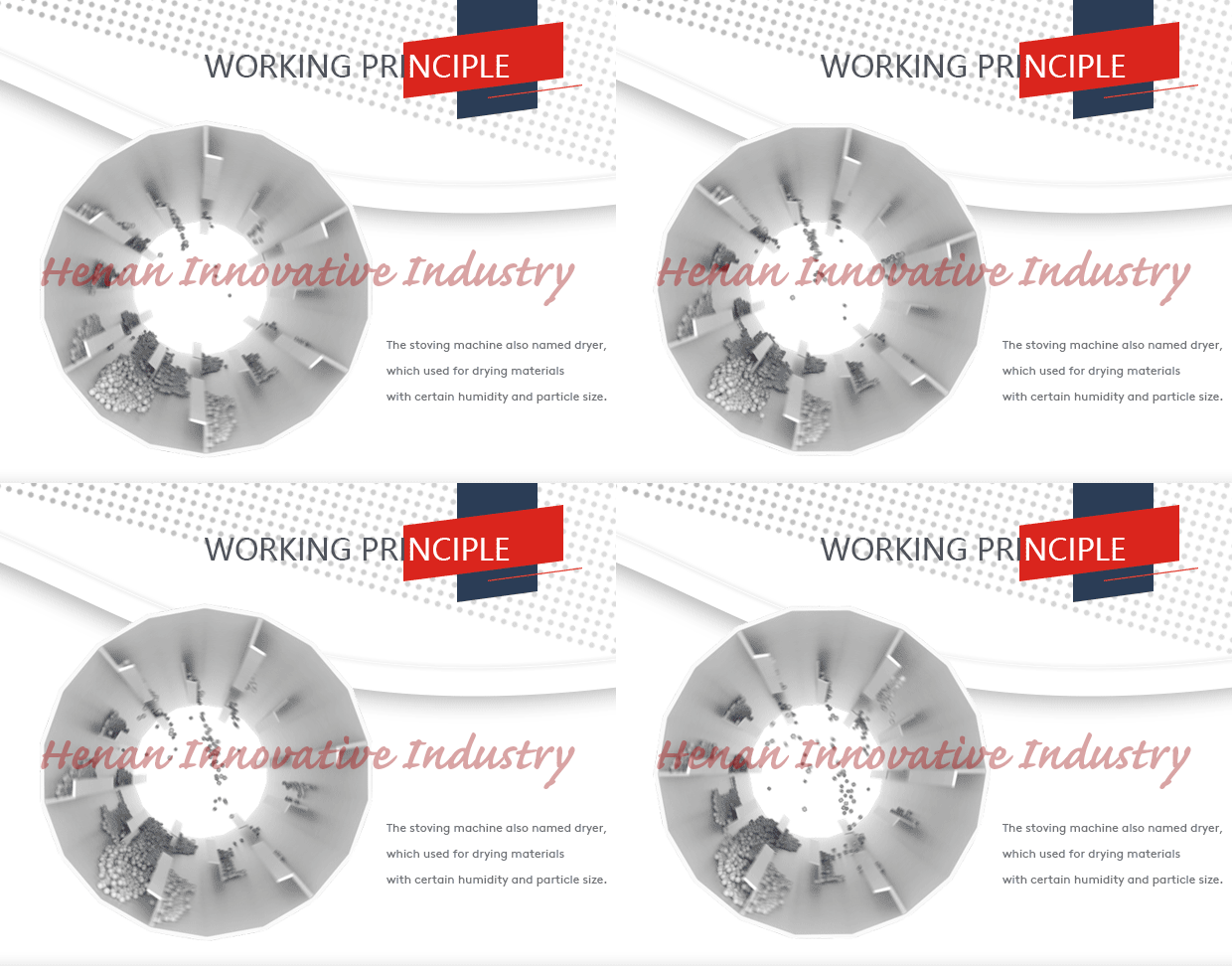
Material enters the dryer at the upper feed end. As the drum rotates, internal lifting fins carry the material upward along the inner wall. When the material reaches sufficient height, it falls back down through the hot gas stream flowing along the length of the drum. This repeated lifting and falling action creates intensive contact between the material and the hot gas, maximizing heat transfer and moisture evaporation efficiency.
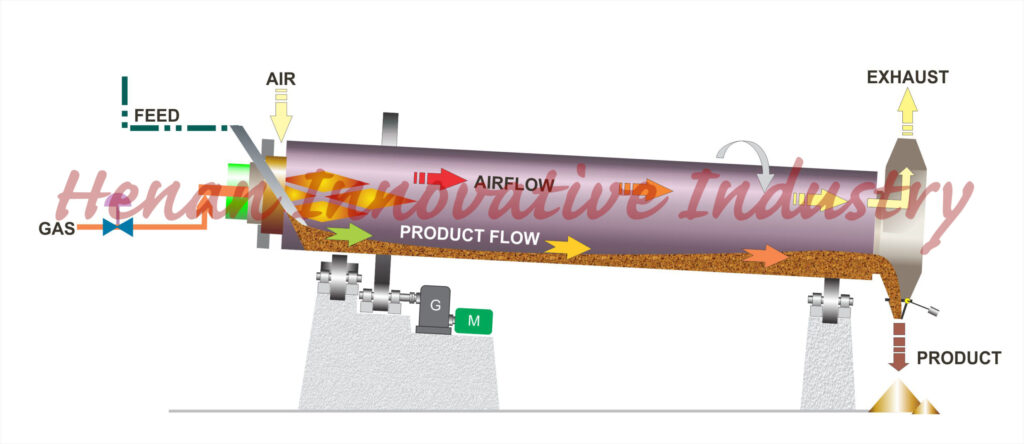
The hot gas stream can flow in the same direction as the material from feed to discharge end, known as co-current flow, or in the opposite direction from discharge to feed end, known as counter-current flow. Counter-current flow provides higher thermal efficiency for most applications while co-current flow is preferred for heat-sensitive materials requiring careful temperature control.
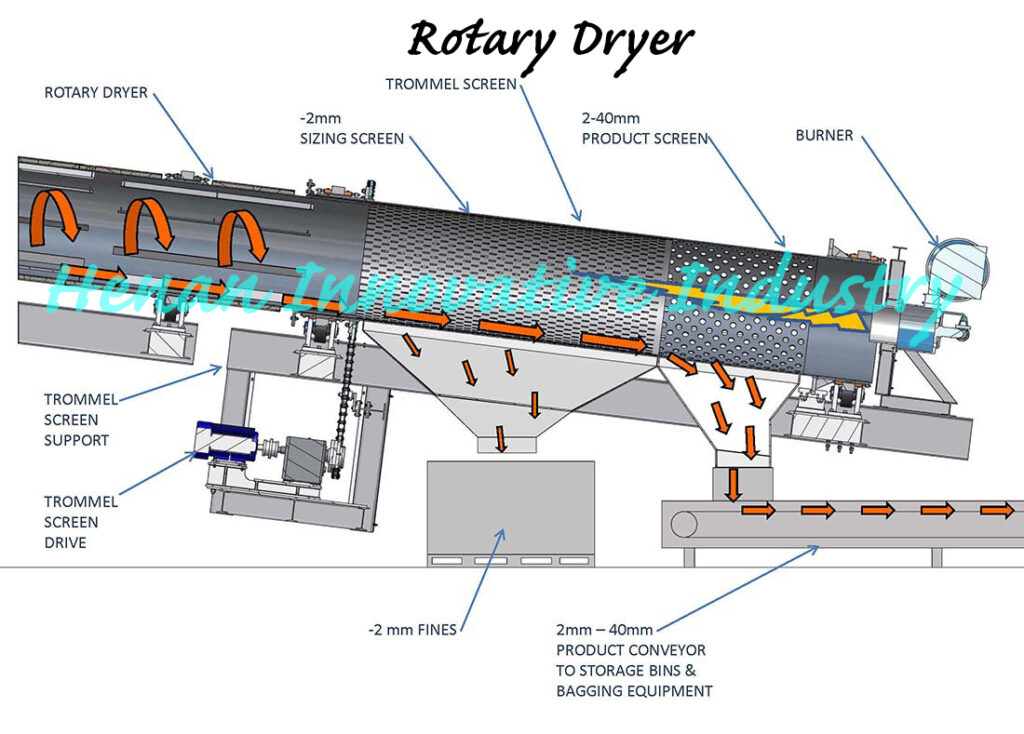
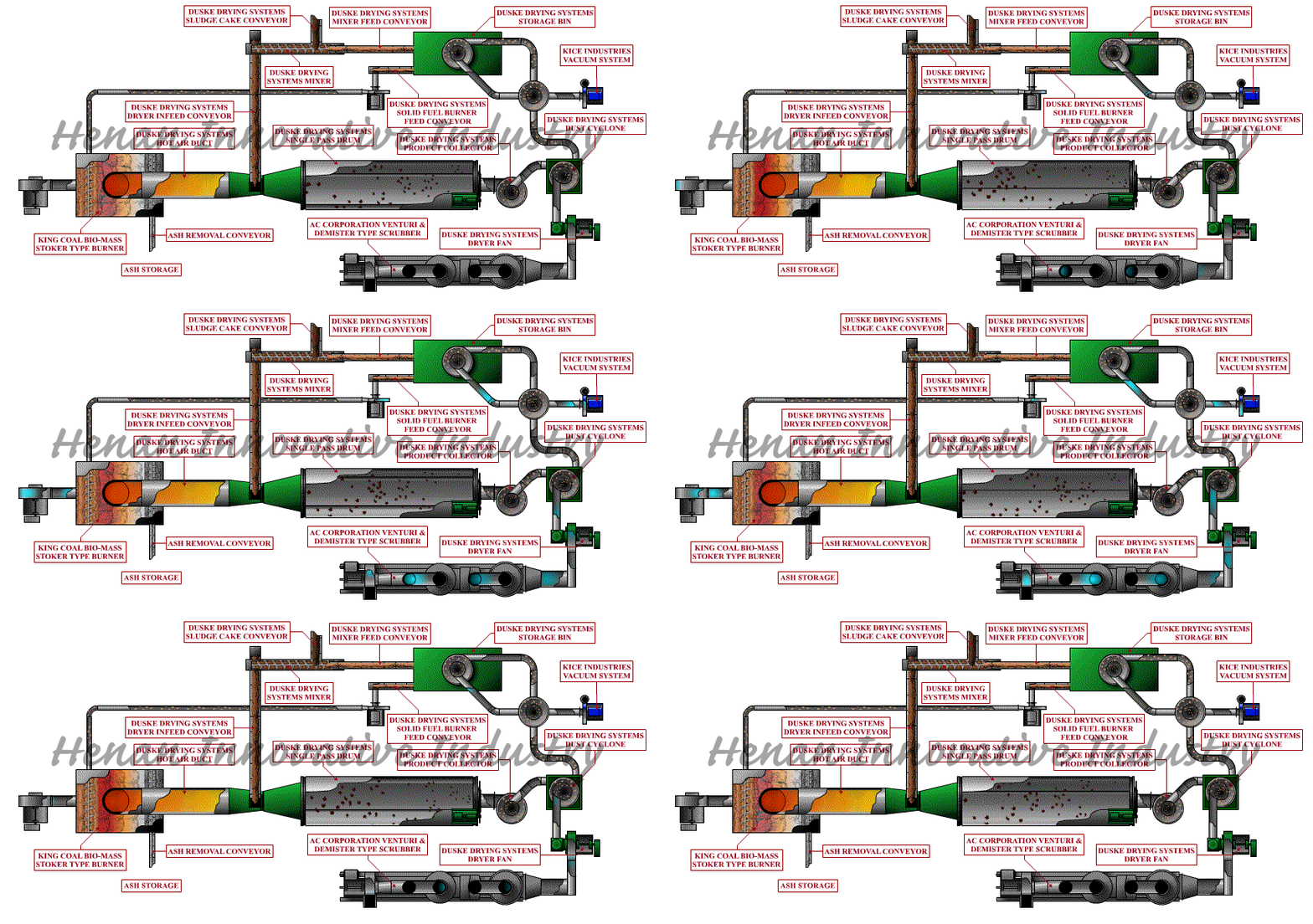
Bio-solids Management Solution
Features and Advantages
01.
Flexible Heat Source Options with Adaptable Supporting Equipment
Flexible heat source options including gas generator, electric heating, and combustor systems, with supporting equipment including conveyors, hoists, dust collectors, and feeders adaptable to different site and fuel availability conditions.
02.
Wide Material Compatibility with Highest Flue Gas Temperature Tolerance
Wide material compatibility across bulk solid materials of varying particle sizes, moisture contents, and physical properties. Less sensitive to particle size variation than other dryer types, accepting the highest flue gas temperatures of any industrial dryer design.
03.
Smooth and Stable Operation with Fast Drying Cycle
Smooth and stable operation with a fast drying cycle, delivering consistent final product quality in terms of color, shape, and moisture content across all production conditions.
04.
Controllable Moisture Output with Intelligent Anti-Ignition Protection
Controllable moisture output with multi-channel intelligent anti-ignition protection and reliable fire handling equipment, ensuring safe continuous operation.
05.
Energy Efficient with Full Automatic Control and Pollution-Free Emissions
Energy efficient design with coal and power saving capabilities. Compatible with various heat sources and full automatic control, delivering pollution-free emissions in compliance with environmental protection standards.
06.
Simple Structure with Easy Maintenance and Precise Temperature Control
Simple structure with low maintenance requirements and economical operating costs. The spiral conveyor design allows easy maintenance access and convenient temperature monitoring at the feed end for precise material temperature control throughout the drying process.
07.
Highest Capacity of Any Industrial Dryer Type
Highest capacity of any industrial dryer type, making it the preferred choice for large-scale continuous drying operations in mining, mineral processing, and industrial material production.
SPECIFICATION DATA
Need a Rotary Dryer for Your Production Line?
Tell us your material type, required moisture reduction, and production capacity. Our engineering team will recommend the right Rotary Dryer configuration for your operation.